
My Journey with DIY Ceiling Fan Installation on Challenging Ceilings
As someone passionate about home improvement, I vividly remember the first time I attempted to install a ceiling fan on a vaulted ceiling in my living room. It was a rewarding challenge that pushed my DIY skills but also taught me invaluable lessons about proper installation and balancing techniques, especially for uneven surfaces. If you’re considering this project, I want to share my personal insights to help you succeed without the usual headaches.
Understanding the Unique Challenges of Vaulted and Uneven Ceilings
Vaulted ceilings add a touch of grandeur but pose unique problems. The uneven surface makes it tricky to ensure that the fan is level and balanced, which is crucial for safe operation and noise reduction. I learned that selecting the right mounting hardware, like adjustable brackets, can make all the difference. Additionally, using a laser level during installation helps me verify the correct positioning, ensuring that the fan blades will run smoothly and quietly.
My Go-To Tips for Installing a Ceiling Fan on Difficult Ceilings
First, I always read the manufacturer’s instructions thoroughly. For vaulted or uneven ceilings, I recommend investing in a mounting kit designed specifically for such surfaces. During my last project, I used a smart DIY home improvement tip that involved using shims to level the fan base before securing it. This little trick made a huge difference in preventing wobble and noise.
When it comes to balancing, I prefer using a ceiling fan balancing kit, which I find available at most hardware stores. After installation, I spin the fan blades by hand and then use the included weights to fine-tune the balance. My experience shows that patience and meticulous adjustments lead to the best results, especially when working with irregular ceilings.
How Do I Ensure Long-Term Stability and Quiet Operation?
To keep the fan running smoothly over time, I suggest checking the mounting hardware periodically and tightening any loose screws. Additionally, I always make sure to select a high-quality ceiling fan with a sturdy motor—this reduces vibrations and noise. For extra peace of mind, I also use anti-vibration pads between the mounting bracket and the ceiling, which you can find in many DIY stores.
What Are the Hidden Tricks for Achieving a Perfect Balance on Uneven Surfaces?
One trick I’ve found effective is to temporarily suspend the fan blades and manually spin them to observe any wobbling. If wobble persists, I adjust the blade weights or replace the blades if necessary. Also, for vaulted ceilings, I recommend installing a longer downrod to ensure proper clearance and reduce strain on the fan motor. For detailed guidance, I often refer to expert articles like those on home improvement sites.
If you’re eager to master this skill, I encourage you to share your experience or ask questions below. Remember, patience and attention to detail are your best friends in DIY ceiling fan projects!
Mastering the Fine Art of Ceiling Fan Balance on Challenging Surfaces
One of the most underestimated aspects of installing a ceiling fan, especially on vaulted or uneven ceilings, is achieving perfect balance. As an experienced DIY enthusiast, I’ve learned that this step is crucial for the longevity of the fan, quiet operation, and safety. It’s not just about mounting the fan but ensuring it runs smoothly without wobbling or noise issues, which can be a real challenge on irregular surfaces.
Why Is Proper Balance So Critical for Your Ceiling Fan?
Incorrectly balanced fans can cause excessive vibrations, wear on the motor, and even dangerous wobbling that could lead to damage or accidents. Moreover, imbalance often results in annoying noise that disrupts the comfort of your living space. Therefore, understanding and applying expert techniques for balancing your fan is essential, particularly when working with vaulted ceilings where irregularities are common.
Key Techniques for Achieving Flawless Balance on Uneven Surfaces
One effective method involves using a laser level to precisely align the mounting bracket and ensure the fan is perfectly centered. It’s also vital to use a high-quality ceiling fan balancing kit, which typically includes weights and clips designed for fine-tuning blade balance. I recommend attaching the weights initially to the blades’ trailing edges, then spinning the fan manually to observe wobble and making incremental adjustments.
Another trick I’ve adopted is temporarily removing the fan blades and manually spinning them to observe how they behave. If wobbling persists, I adjust the blade weights or swap out blades if they are warped or damaged. For vaulted ceilings, installing a longer downrod can help improve clearance and reduce strain, leading to better balance overall.
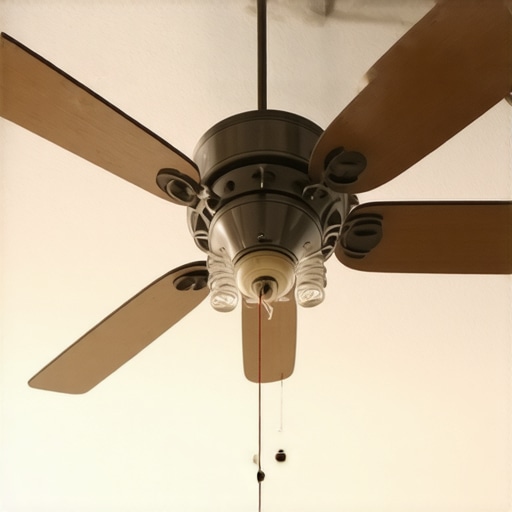
Properly balanced blades drastically reduce vibrations and noise, ensuring your ceiling fan operates smoothly and safely. This small but vital step can save you future headaches and costly repairs, making your DIY project truly rewarding.
Additional Tips for Long-Term Stability and Quiet Operation
Regular maintenance is key—periodically check and tighten screws, inspect the mounting hardware, and replace worn-out blade brackets or weights. Investing in a high-quality fan with a robust motor also pays off, as it minimizes vibrations. I also recommend using anti-vibration pads between the mounting bracket and ceiling surface; these are often overlooked but can dramatically dampen vibrations and noise over time.
For more advanced insights, exploring expert articles such as those on home improvement sites can provide additional techniques tailored for challenging installation scenarios. Remember, patience and meticulous adjustments are your best allies, especially when working on uneven surfaces.
Have you faced similar challenges with ceiling fan installations? What tricks or tools helped you achieve a perfect balance? Share your experience or ask questions below—your insights might help fellow DIY enthusiasts conquer their own projects!
Reflections on the Subtle Art of Fan Balance and Its Deep Implications
Over the years, my journey with ceiling fan installation has revealed that achieving long-term stability isn’t merely a matter of initial setup but an ongoing commitment to understanding the nuanced dynamics at play. I’ve come to appreciate how seemingly minor factors, like the quality of the mounting hardware or the precision in blade adjustments, can have profound effects on the fan’s performance over time.
One particular instance that stands out involved a vintage-style fan I installed on an uneven, textured ceiling. The first few weeks were smooth, but gradually, vibrations crept in, causing noise and wobbling. It was a humbling reminder that even the most meticulous initial installation could be compromised if I neglected routine checks. This led me to develop a personal maintenance routine—tightening screws, inspecting blade alignment, and periodically re-balancing the blades. These small efforts significantly extended the lifespan of the fan and maintained its quiet operation, reinforcing that maintenance is an integral part of DIY mastery.
The Hidden Nuances of Material Choice and Its Impact on Longevity
Through my experience, I’ve learned that material quality plays a pivotal role in long-term stability. For example, using high-grade anti-vibration pads made from resilient rubber or silicone can absorb shocks and reduce vibrations that cause wobble. Similarly, selecting a fan with a robust, high-quality motor minimizes vibrations transmitted through the mounting hardware. I once replaced a cheap fan with a premium model, and the difference was night and day—quieter, more stable, and less prone to wobbling even on uneven ceilings.
It might seem subtle, but investing in durable materials and components pays off exponentially in the long run. The peace of mind knowing that your DIY efforts will stand the test of time is priceless. I encourage fellow enthusiasts to research and choose parts thoughtfully—sometimes, a small upgrade can prevent costly repairs or replacements down the line.
Deepening the Understanding: Can Advanced Techniques Further Improve Long-Term Performance?
Absolutely. For those willing to delve deeper, techniques such as dynamic balancing—using professional-grade laser and vibration analysis tools—can provide insights beyond basic adjustments. While these might seem beyond typical DIY scope, understanding their principles helps inform smarter choices and better troubleshooting. For instance, I’ve experimented with laser alignment tools to fine-tune the mounting bracket’s positioning, which proved invaluable on especially challenging surfaces.
Moreover, exploring the science behind material fatigue and resonance can inform better choices in fan design, installation angles, and maintenance routines. Resources like home improvement expert articles often share advanced techniques that, when adapted thoughtfully, can elevate your DIY skills significantly.
Inviting Community Insights and Personal Experiences
Have you faced similar challenges, or have you discovered unique tricks to ensure your fans stay stable and quiet over the years? Sharing your experiences can be incredibly valuable—sometimes, a small tip from a fellow DIYer can make a world of difference. I invite you to comment below or explore related projects like creative DIY solutions for your home.
Remember, mastering your ceiling fan’s longevity and quiet operation is a continuous journey—one that combines initial craftsmanship with ongoing care and curiosity. Keep experimenting, learning, and sharing your insights. That’s the true essence of DIY mastery, turning simple projects into lasting achievements.
Leveraging Advanced Tools for Precision Alignment
One of the most effective ways to elevate your DIY ceiling fan projects, especially on uneven surfaces, is by integrating advanced alignment tools. I have found that employing laser-guided levels not only ensures the correct positioning of the mounting bracket but also significantly reduces the margin of error that can occur with traditional bubble levels. For instance, a laser level allows for a perfect horizontal and vertical alignment, which is crucial when working on vaulted or textured ceilings where visual cues can be deceptive. This approach minimizes vibrations caused by misalignment and promotes a more balanced operation over the long term. For those serious about precision, exploring professional-grade laser alignment tools, as recommended in home improvement expert articles, can be transformative.
Understanding Material Science for Enhanced Durability
Beyond tools, selecting materials with superior resilience is fundamental. I have transitioned to using high-grade anti-vibration pads crafted from resilient rubber compounds, which effectively absorb shocks and dampen vibrations transmitted through the mounting hardware. Additionally, choosing fans equipped with high-torque, low-vibration motors made from premium materials like ceramic or copper enhances stability and smooth operation. An example I encountered involved replacing a basic fan with a commercial-grade unit, resulting in a marked reduction in wobbling and noise, even on textured ceilings. This underscores that investing in quality components is a wise decision for DIY enthusiasts aiming for longevity.
Can Dynamic Balancing Techniques Significantly Extend Fan Lifespan?
Absolutely. Dynamic balancing involves using specialized equipment to analyze the fan’s vibration patterns during operation, enabling pinpoint adjustments that static balancing cannot achieve. While such techniques are often employed by professionals, understanding their principles can empower DIYers. For instance, using a vibration analyzer, I was able to detect imbalances caused by slight blade warping or manufacturing inconsistencies. Implementing targeted corrections, such as repositioning weights with precision or replacing damaged blades, led to a dramatic improvement in stability. According to home improvement experts, mastering these advanced methods can substantially prolong the lifespan of your fans and reduce maintenance costs.
Engaging with the Community for Collective Wisdom
One of the most enriching aspects of DIY work is sharing insights and learning from others. If you’ve faced similar challenges with ceiling fan stability or balance, I invite you to share your experiences. Perhaps you’ve discovered a unique material, tool, or technique that made a difference. Engaging in forums or commenting on related articles can provide practical solutions and foster a community of skilled DIYers dedicated to craftsmanship and innovation. Remember, each project offers an opportunity to refine your skills and contribute to collective knowledge—so don’t hesitate to ask questions or offer your own tips at our contact page.
Things I Wish I Knew Earlier (or You Might Find Surprising)
Patience is Key
One lesson I learned the hard way was the importance of patience. Rushing through the balancing process often led to wobbling fans and noisy operation. Taking my time to fine-tune the blades with a balancing kit made a huge difference in the long run.
The Value of Quality Tools
Investing in a good laser level and high-quality mounting hardware initially seemed costly, but it saved me hours of frustration later. These tools helped me achieve precise alignment on uneven surfaces, ensuring a safer and quieter fan.
Material Matters
Choosing durable, vibration-absorbing materials like premium anti-vibration pads significantly reduced wobbling and noise. I realized that cheap components might seem tempting but often lead to costly repairs and replacements down the line.
Learning from Others
Reading expert articles and watching tutorials provided insights I wouldn’t have discovered on my own. The more I learned, the more confident I felt tackling tricky installation scenarios.
Maintenance is Ongoing
Regular checks and tightening screws after installation help maintain the fan’s stability. I now see it as part of my DIY routine to keep everything running smoothly.
Resources I’ve Come to Trust Over Time
- Home Improvement Expert Articles: The articles on home improvement sites have been invaluable for advanced balancing techniques and troubleshooting.
- Hardware Store Guides: Local hardware store guides and staff advice helped me choose the right mounting brackets and tools for uneven ceilings.
- Online DIY Forums: Forums like DIY Chatroom and Reddit’s r/DIY are excellent for sharing experiences and getting personalized tips from fellow DIY enthusiasts.
Parting Thoughts from My Perspective
Installing a ceiling fan on challenging surfaces like vaulted or uneven ceilings can seem daunting at first, but with the right tools, patience, and a willingness to learn, it’s a rewarding project. The key takeaway is that quality components and ongoing maintenance are crucial for long-term stability and quiet operation. If this resonated with you, I’d love to hear your thoughts or experiences. Sharing our DIY journeys not only helps us improve but also inspires others to tackle their own projects with confidence. Remember, every challenge you overcome adds to your skills and confidence—so keep tinkering, learning, and sharing!
I really appreciate this detailed share on tackling uneven ceilings for ceiling fans. As someone who’s attempted similar projects, I agree that using a laser level makes a huge difference in ensuring proper alignment. I also found that pre-installing adjustable brackets helps when dealing with textured or irregular surfaces, as it allows for fine-tuning after the initial mount. Patience is definitely essential; rushing the balancing can lead to wobbling and noise down the line. One trick I’ve discovered is to use a smartphone app with a spirit level feature to double-check alignment and blade balance, especially when working in tight or awkward spaces. Has anyone tried dynamic balancing methods, like using vibration analyzers? Do they really help prolong the lifespan of the fan or are they overkill for most DIYers? Would love to hear more experiences or recommendations on tools that make these tricky installations more manageable.