
Discovering the Joy of DIY Montessori Activity Boards with Gears
As a parent passionate about early childhood development, I’ve always sought ways to create engaging, educational toys at home. My journey into designing a Montessori-inspired activity board with gears started when my little one showed curiosity about how things work. One afternoon, I decided to combine my love for DIY projects with my child’s fascination for mechanical movements, leading me to build a gear-based activity board that sparks creativity and cognitive growth.
Why Gears? Unveiling the Magic of Mechanical Learning
Gears are not just fascinating to look at; they are powerful educational tools. During my research, I came across expert insights on how manipulating gears can develop fine motor skills and understanding of cause-and-effect relationships (source). Incorporating gears into a Montessori activity board allows children to explore mechanical concepts in a tactile, hands-on way, fostering problem-solving skills and spatial awareness.
Designing the Perfect Gear Board: My Personal Approach
My first step was selecting safe, durable materials—mostly wood and non-toxic paints. I sketched a simple layout, ensuring the gears would be easily accessible and manipulable. I used a variety of gear sizes to introduce concepts of size and complexity gradually. The assembly involved precise drilling and fitting, which I learned from detailed step-by-step guides like DIY guides. The result was a vibrant, interactive board that my child could operate independently, enhancing both motor coordination and cognitive understanding.
What Are the Educational Benefits of a Gear-Based Activity Board?
From my experience, children learn patience, persistence, and fine motor control when engaging with gear mechanisms. Watching my kid turn the gears and see the connected parts move was rewarding—it’s a simple yet profound way to introduce foundational engineering concepts. Moreover, it encourages curiosity about how everyday machines work, laying the groundwork for STEM learning. I also discovered that incorporating varied textures and colors enhances sensory development, making the activity board not just educational but also delightful to explore.
How Can I Customize a Montessori Gear Board for Different Age Groups?
Adjusting complexity is key. For younger children, I recommend using larger gears with fewer connections, focusing on basic cause-and-effect. For older kids, add more gears, small parts, and intricate mechanisms to challenge their understanding. You might also consider integrating other Montessori-inspired elements like shape sorters or sensory panels, creating a versatile learning station. To keep the project engaging, I suggest exploring creative solutions like repurposing household materials or adding personalized decorative touches, which make the activity board uniquely yours.
If you’re inspired to craft your own Montessori gear activity board, I encourage sharing your experience or asking questions in the comments below. Building such educational toys combines craftsmanship with nurturing curiosity, providing a meaningful way to support your child’s early learning journey.
Innovative Techniques to Elevate Your Montessori Gear Activity Boards
Building on my previous experiences with simple gear boards, I’ve discovered that integrating advanced mechanical concepts can significantly enhance the educational value of DIY Montessori toys. For instance, incorporating **gear trains** that demonstrate gear ratios and speed variations not only captivates children’s interest but also introduces foundational engineering principles in a playful context. These sophisticated setups require precise planning and assembly, often involving **interlocking gear systems** that can be customized to suit different learning stages.
How Can Experts Design Multi-Layered Gear Systems for Deeper Learning?
Designing multi-layered gear systems involves understanding **compound gear trains**, which can be used to demonstrate **mechanical advantage** and **force multiplication**. For example, a two-stage gear train can showcase how input speed is affected by gear ratios, providing a tactile experience of physics concepts. To ensure safety and durability, using **non-toxic, eco-friendly materials**—such as sustainably sourced woods and water-based paints—is essential. Moreover, integrating **adjustable gear mounts** allows educators and parents to modify complexity as the child’s skills develop. For inspiration on creating such intricate mechanisms, I recommend consulting comprehensive guides like advanced pattern design guides.
What Are the Practical Challenges in Crafting Complex Gear Boards?
One of the main challenges lies in achieving **precision in drilling and fitting**. Misaligned gears can lead to slippage or malfunction, which may hinder the learning experience. To mitigate this, I suggest using **jigs and templates** for consistent gear placement. Additionally, integrating **movable and lockable gear stations** can help children explore different configurations and understand mechanical relationships dynamically. It’s also beneficial to incorporate **visual cues**—such as color-coded gears or numbered gear sets—to facilitate learning and troubleshooting. For those interested in expanding their DIY skills, exploring guides on **seamless drywall patching** or **building custom storage solutions** can provide useful techniques applicable in crafting sturdy, precise gear boards.
How Can I Incorporate Modern Technology to Enhance Mechanical Montessori Toys?
Integrating simple electronic components, such as **Arduino sensors**, can add an interactive dimension, allowing children to see real-time feedback or control gear movements remotely. For example, sensors can detect gear rotation speed, which can be displayed on a screen or used to trigger other educational modules. This fusion of mechanical and digital learning tools creates a holistic STEM environment. If you’re interested in blending electronics with your DIY projects, tutorials on **creating interactive electronic toys** are invaluable resources. Remember, the goal is to make learning engaging without overwhelming young learners with complexity, so gradual integration is key.
For further inspiration and practical tips, don’t hesitate to explore expert guides on advanced DIY techniques. Sharing your own innovative gear designs or asking for feedback can spark new ideas and help refine your craft. Feel free to comment below or suggest related topics you’d like to explore—your insights contribute to a thriving DIY community.
Delving into the Nuances of Gear Ratios and Mechanical Advantage
As I ventured deeper into creating sophisticated Montessori gear boards, I realized that understanding gear ratios and mechanical advantage opens a new realm of educational possibilities. Incorporating complex gear trains allows children to explore how different gear sizes influence speed and torque, fostering an intuitive grasp of physics principles. My personal experience with designing multi-layered gear systems taught me that precise calculations and meticulous assembly are crucial for smooth operation and effective learning outcomes.
Designing Multi-Functional, Multi-Layered Gear Systems for In-Depth Learning
Creating multi-layered gear trains involves balancing complexity with safety. I experimented with compound gear systems that demonstrate force multiplication and speed variation. These setups allow children to manipulate gears and observe real-time changes, deepening their understanding of mechanical principles. Using eco-friendly materials like sustainably sourced woods and non-toxic paints ensures durability while maintaining safety. The challenge lies in aligning gears perfectly; I found that employing precision jigs and templates makes a significant difference in achieving seamless rotation and engagement.
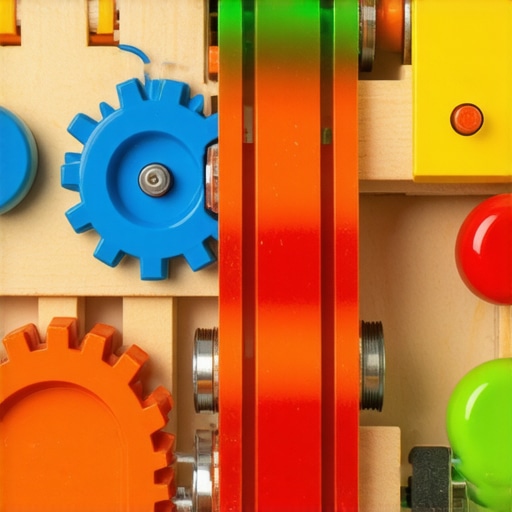
To visualize this complexity, imagine a gear train where the input gear drives an intermediate gear, which then drives a larger gear, creating a slower but more forceful output—an engaging way to introduce children to the concept of mechanical advantage in a hands-on manner.
Enhancing Engagement through Interactive Electronic Components
Integrating simple Arduino sensors or other electronic modules transforms static gear systems into interactive learning tools. For instance, sensors can detect the rotation speed or direction, providing immediate feedback via a connected display or sound. This fusion of mechanical and digital elements creates a dynamic STEM environment that keeps children curious and motivated. I found that gradually introducing electronic enhancements—starting with basic sensors—helps young learners adapt without feeling overwhelmed. This approach aligns with the Montessori principle of fostering independent discovery while integrating modern technology seamlessly.
Sharing Your Advanced DIY Gear Projects and Further Exploration
If you’re inspired to push the boundaries of your DIY Montessori gear boards, I encourage you to share your designs and experiences. The journey of integrating advanced mechanical concepts offers endless opportunities for creativity and educational impact. For more inspiration and detailed technical guidance, explore expert guides on complex DIY projects. Remember, the key is to tailor the complexity to your child’s developmental stage, ensuring that each mechanism remains safe, engaging, and educational. Feel free to comment below or reach out with your innovative ideas—collaborative learning enriches the DIY community and sparks continuous improvement in educational toys.
Harnessing Mechanical Mastery for Deep Educational Impact
Delving into the intricacies of gear ratios and mechanical advantage has profoundly enriched my approach to creating Montessori-inspired gear boards. These advanced systems serve not only as engaging toys but as powerful educational tools that introduce children to foundational engineering and physics principles through hands-on experimentation. My experience demonstrates that meticulously designed gear trains can effectively illustrate how varying gear sizes influence speed and torque, fostering a nuanced understanding of real-world mechanical systems (source).
Designing Multi-Layered Gear Trains for Sophisticated STEM Learning
Constructing multi-layered gear systems involves a careful balance of complexity and clarity. I found that incorporating compound gear trains with multiple stages allows children to explore mechanical advantage and force multiplication in a tactile manner. For example, a gear train where an input gear drives an intermediate gear, which then drives a larger gear, visually and physically demonstrates how gear ratios can slow down or amplify force—a concept vital to understanding machinery. To ensure durability and safety, I prioritize using eco-friendly, non-toxic materials such as sustainably sourced woods and water-based paints, aligning with environmentally conscious educational practices.
Overcoming Precision Challenges in Complex Gear Assemblies
One of the most demanding aspects of creating intricate gear systems is achieving perfect alignment. Slight misalignments can cause slippage or uneven rotations, which hampers both functionality and learning. To address this, I utilize precision jigs and templates that facilitate accurate drilling and gear placement. Additionally, integrating adjustable gear mounts allows for fine-tuning during assembly and ongoing modifications as the child’s understanding deepens. Visual cues, such as color-coded gears or numbered sets, also assist in troubleshooting and reinforce conceptual learning.
Integrating Digital Feedback for Enhanced Engagement
Innovative integration of simple electronic components elevates the interactive potential of mechanical Montessori toys. For instance, Arduino sensors can detect rotation speed or direction, providing real-time feedback via displays or auditory signals. This fusion of mechanical and digital elements creates a comprehensive STEM environment that captivates and educates simultaneously. My approach involves starting with basic sensors, gradually expanding the digital interface to avoid overwhelming young learners, thus maintaining the Montessori principle of independent discovery combined with technological literacy.

Visualize a complex gear train where input rotation results in a slower, forceful output, exemplifying mechanical advantage and offering a tangible physics lesson.
Encouraging Creative Customization and Progressive Complexity
To tailor gear systems for various developmental stages, I recommend progressively increasing the complexity. For younger children, larger gears with fewer connections suffice, focusing on cause-and-effect relationships. For older children, incorporate smaller gears, multiple layers, and adjustable mechanisms to challenge their understanding. Creative customization—such as repurposing household items or adding decorative elements—can make each project uniquely engaging and personally meaningful, fostering both creativity and technical skills.
Engaging with the DIY Community for Continuous Innovation
If you’re passionate about advancing your mechanical DIY projects, I invite you to share your designs and insights. Collaboration and feedback are invaluable for refining techniques and expanding educational potential. For in-depth technical guidance and inspiration, explore expert resources on complex DIY projects. Your contributions and questions can spark new ideas, deepen understanding, and help foster a vibrant community dedicated to innovative, educational DIY crafts.
Things I Wish I Knew Earlier (or You Might Find Surprising)
1. Gears Are More Than Just Mechanical Parts
When I first started building gear-based Montessori activity boards, I underestimated how deeply gears can influence cognitive development. I realized later that gears aren’t only about movement; they teach cause-and-effect relationships and problem-solving skills, which are fundamental in early learning.
2. Material Choice Matters More Than You Think
Initially, I used basic wood, but I soon discovered that selecting eco-friendly, non-toxic paints and sustainable woods enhances safety and durability, making the learning experience more meaningful and longer-lasting for children.
3. Customization Can Be a Game-Changer
Personalizing gear sizes, adding colors, or integrating sensory elements can captivate different age groups and learning stages. I found that tailoring the complexity makes the activity more engaging and educational.
4. Precision in Assembly Is Crucial
Misaligned gears can cause frustration or malfunction. Using templates and jigs during assembly ensures smooth operation, reinforcing the importance of attention to detail in DIY projects.
5. Combining Mechanical and Digital Elements Boosts Engagement
Incorporating simple sensors or electronic feedback can turn a basic gear board into an interactive STEM station, sparking curiosity and extending learning beyond physical manipulation.
6. Safety Is Always a Priority
Sharp edges, small parts, or loose fittings can pose risks. I learned that thorough testing and secure assembly are essential for creating a safe environment for children to explore freely.
7. The Process Is as Educational as the Product
Building these boards taught me patience, planning, and creativity. It’s a rewarding journey that not only results in a valuable educational toy but also deepens your understanding of mechanical principles and child development.
Resources I’ve Come to Trust Over Time
- DIY Guides: The comprehensive step-by-step instructions at DIY guides have been invaluable for precise assembly techniques.
- Montessori Educational Principles: The Montessori method explained by experts on home decor ideas inspires how to design engaging, child-centered activities.
- Eco-Friendly Material Sources: I recommend checking out sustainable materials for safe and eco-conscious crafting.
Parting Thoughts from My Perspective
Creating DIY Montessori gear boards with gears has been a transformative experience. Not only do these projects foster children’s cognitive and motor skills, but they also offer a rewarding way to connect, learn, and innovate. If you’re passionate about early childhood development and enjoy hands-on crafting, I highly encourage you to explore gear-based activities. They’re more than just toys—they’re tools for curiosity, discovery, and lifelong learning. If this resonated with you, I’d love to hear your thoughts or see your own creations. Share this article with someone who might find it helpful, and happy crafting on your educational journey!