
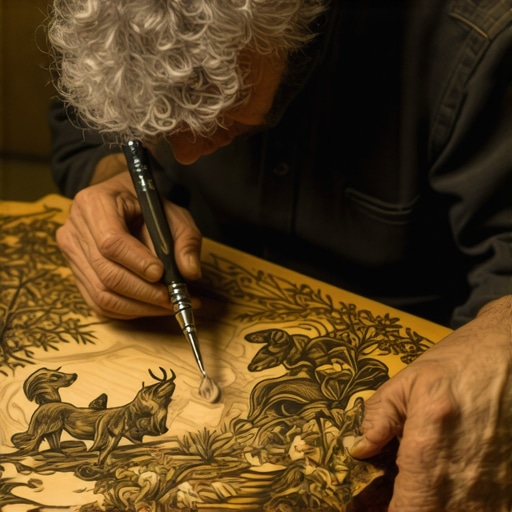
My Passion Ignited by a Burning Stick
Ever since I picked up my first pyrography pen, I felt an immediate connection to this ancient art form. I remember fumbling with the tools, trying to create my first animal portrait, which surprisingly resembled a squirrel more than a majestic fox. Despite the initial mistakes, I was hooked. Over time, I realized that mastering pyrography was about patience, precision, and a genuine passion for bringing realistic wildlife and portraits to life on wood.
Discovering the Secrets of Photorealistic Pyrography
One of the biggest breakthroughs in my journey was understanding how to achieve photorealism. I studied various techniques, including layering shades and controlling the temperature of my pyrography tools. I found that working in small, deliberate strokes helped mimic the textures found in fur, skin, and feathers. Reading expert guides, such as those from this resource, was instrumental in refining my skills.
My Favorite Tools and Materials
Initially, I used a basic pyrography pen, but as I progressed, I invested in adjustable temperature tools and different tip shapes for detail work. High-quality woods like cherry and maple became my go-to surfaces because of their smooth grain and durability. I also learned the importance of sanding and sealing my artwork properly to enhance the final effect and longevity of my pieces.
From Wildlife to Portraits: The Artistic Evolution
My early projects focused on animals—deer, wolves, and eagles—capturing their essence through meticulous shading. Later, I challenged myself with human portraits, which required even more finesse. I discovered that understanding anatomy and light sources significantly improved my realism. Sharing my progress on social platforms was encouraging and helped me connect with other pyrography enthusiasts.
What motivates you to master new artistic techniques like pyrography?
For me, it’s the thrill of transforming a simple piece of wood into a lifelike masterpiece. Each project pushes me to learn more about shading, texture, and detail. If you’re curious about exploring this craft, I recommend starting with beginner-friendly tutorials and gradually experimenting with different techniques. For additional inspiration, check out this guide.
If you’ve ever tried pyrography or are planning your first project, I’d love to hear your experiences! Share your journey in the comments below or connect with me on social media for more insights and tips.
Unlocking the Depths of Photorealism in Pyrography
Exploring the realm of photorealistic pyrography opens a world of intricate detail and lifelike textures that captivate viewers. Achieving this level of realism requires not only technical skill but a deep understanding of light, shadow, and texture. As I delved into advanced layering techniques, I discovered that controlling the temperature of my tools and working in delicate, deliberate strokes are essential. The subtle gradations in shading mimic fur, skin, and feathers seamlessly, transforming simple wood into a vivid portrait or wildlife scene.
Tools That Elevate Your Artistry
While starting with a basic pyrography pen is common, investing in adjustable temperature tools significantly enhances precision. Different tip shapes—such as fine points, shading tips, and textured tips—allow for a range of effects. For surfaces, woods like cherry, maple, and birch are preferred for their smooth grain and ability to hold fine detail. Proper surface preparation, including sanding and sealing, ensures that each stroke is crisp and durable. Remember, high-quality tools and materials are the backbone of professional-grade pyrography projects, as emphasized by experts in this comprehensive guide.
Refining Your Artistic Voice: From Wildlife to Human Portraits
My journey began with capturing animals—deer, wolves, eagles—each requiring meticulous shading to convey texture and depth. Transitioning into human portraits, I learned that understanding anatomy, light sources, and facial structure dramatically improved realism. This evolution reflected my growing confidence and skill, allowing me to depict emotions and subtle nuances in skin tones and hair. Sharing my work on social platforms not only provided feedback but also connected me with a community of passionate pyrographers eager to exchange techniques and ideas.
How can mastering advanced pyrography techniques impact your artistic expression and professional opportunities?
Mastering these techniques unlocks new possibilities for personalized art, commissions, and even niche markets like wildlife conservation or portraiture. It elevates your craft from hobbyist to artisan, enabling you to create detailed, compelling pieces that command recognition and value. As with any art form, continuous learning, experimenting with different textures, and studying expert guides can significantly expand your skills. For a deeper dive into professional-level pyrography, consider exploring this resource.
If you’re passionate about perfecting your pyrography skills or are just beginning, I encourage you to share your experiences or ask questions. Connecting with fellow artists can inspire new techniques and help you overcome challenges in your artistic journey.
Embracing the Nuances of Light and Shadow in Pyrography
As I delved deeper into photorealistic pyrography, I realized that mastering the subtle interplay of light and shadow was essential for bringing my artwork to life. Unlike traditional shading, which often relies on uniform gradients, photorealism demands a nuanced understanding of how light interacts with textures and surfaces. I spent countless hours studying photographs of wildlife and portraits, analyzing how natural light creates highlights and shadows, and then translating these into delicate strokes with my pyrography tools.
One technique that transformed my approach was working in layers—starting with a light base and gradually building up darker tones through controlled, deliberate passes. Controlling the temperature of my tools allowed me to produce softer or sharper edges, which was crucial for rendering fur, skin textures, and intricate details. This process required patience and a keen eye for detail, but the results were profoundly rewarding.
The Art of Texture: From Furry Animals to Smooth Skin
Texture is the soul of photorealistic pyrography. Achieving the tactile quality of fur, feathers, or skin involves a combination of technique and understanding material properties. I experimented with different tip shapes and stroke directions to mimic the flow of fur, capturing the density and sheen of each strand. For human portraits, I focused on subtle shading around the eyes, lips, and cheekbones, which added depth and realism. Reading expert guides, such as those from this resource, helped me refine my layering and texturing processes.
In this journey, I also learned that surface preparation influences texture fidelity. Sanding the wood to a smooth finish and sealing it properly prevents unwanted blotches and ensures clean strokes for fine detail work. The choice of wood, like cherry or maple, also impacts how well the textures translate visually—smoother grains allow for more precise rendering of intricate details.
Reflections on Artistic Growth and Personal Challenges
Progressing towards photorealism was not without its challenges. There were moments of frustration when subtle details didn’t turn out as envisioned. However, these setbacks taught me resilience and the importance of continuous practice. I found that keeping a sketchbook to plan shading and testing different techniques helped me develop a more intuitive sense of how to manipulate my tools effectively.
Sharing my evolving work on social media created a feedback loop that motivated me to push further. The pyrography community is incredibly supportive, and observing others’ techniques inspired me to experiment with unconventional textures and effects. This collaborative learning reinforced that mastery in pyrography is a journey, not a destination, and each piece is a step toward greater artistic expression.
How can advanced techniques in pyrography unlock new creative and professional opportunities?
Mastering these sophisticated methods opens doors to bespoke commissions, art exhibitions, and niche markets like wildlife conservation or portraiture. It allows you to craft hyper-realistic pieces that command respect and value. For instance, detailed wildlife portraits can serve as compelling donations for conservation campaigns or personalized gifts that carry deep emotional resonance. As I continue to explore, I encourage fellow artists to challenge themselves, learn from tutorials, and push the boundaries of their craft.
If you’re passionate about elevating your pyrography skills, I invite you to share your experiences or questions. Engaging with a community of dedicated artists can provide fresh insights and inspiration for your next project. Remember, every stroke brings you closer to your artistic vision, so keep experimenting and refining your techniques.
Harnessing the Power of Layered Shading and Fine Detailing in Pyrography
As I delved deeper into the intricacies of photorealistic pyrography, I discovered that layering shades meticulously creates a stunning depth and texture that mimic real-life surfaces. Building upon basic shading techniques, advanced artists employ a series of delicate, controlled passes with variable temperatures to gradually develop tonal variation. This process requires an acute eye for detail and patience, but the visual payoff is extraordinary. Mastering this layered approach allows artists to capture the subtle nuances of fur, skin, and feathers with astonishing realism.
The Critical Role of Surface Preparation and Material Selection
Beyond technique, surface quality plays an essential role in achieving professional results. I learned that sanding the wood to a perfectly smooth finish and sealing it with appropriate coatings significantly enhances the precision of fine strokes. High-quality woods such as cherry, maple, and birch are preferred for their smooth grain and ability to hold detailed work without blotching. These materials, when combined with proper sealing techniques, create an ideal canvas for intricate, layered shading and texturing. For a comprehensive guide on preparing your surfaces, explore this resource.
Mastering Light, Shadow, and Texture for Hyper-Realistic Portraits
Achieving photorealism demands more than shading—it involves a nuanced understanding of how light interacts with textures. I dedicated hours to studying photographs, analyzing how highlights and shadows define form, and translating these into my pyrography work. Working in multiple layers, I would start with a soft base and incrementally add darker tones, adjusting temperature and stroke density to produce seamless transitions. This technique is particularly effective for rendering skin tones and hair, where subtle gradations are vital. The mastery of light and shadow transforms a simple silhouette into an expressive, lifelike portrait.
Integrating Texture Techniques to Capture Material Realism
Texture is the essence of realism in pyrography. I experimented with various tip shapes and stroke patterns to emulate different materials—fine points for hair, shading tips for fur, and textured tips for feathers. Controlled directional strokes help convey the natural flow of hair and fur, while stippling and cross-hatching techniques add depth and variation. Properly sealing the finished piece ensures the textures are preserved and enhances visual sharpness. For detailed insights into texturing methods, consider reviewing this guide.
Refining Your Skills Through Continuous Practice and Community Feedback
Progressing toward mastery is a journey of relentless practice and learning. I maintained a dedicated sketchbook to experiment with different shading and texturing techniques, keeping track of what worked best for each material. Sharing my works online fostered a vibrant community where constructive feedback propelled my growth. Engaging with fellow pyrographers exposed me to diverse styles and innovative methods, inspiring me to push boundaries. Remember, every piece is an opportunity to refine your craft; persistence and openness to critique are essential for advancement.
How Can Deepening Your Pyrography Skills Unlock Unique Artistic and Commercial Opportunities?
Refining advanced techniques opens doors to creating hyper-realistic commissions, participating in art exhibitions, and developing niche markets such as wildlife conservation or personalized portraiture. The ability to produce detailed, textured artworks elevates your reputation from hobbyist to professional artist. For example, highly detailed wildlife portraits can serve as compelling donations for conservation efforts or as bespoke gifts that evoke deep emotional connections. Continuous exploration and mastery of complex effects enable you to diversify your portfolio and command premium prices. If you’re eager to expand your expertise, I encourage exploring this advanced guide for further insights.
Engaging with the pyrography community and sharing your progress not only offers valuable feedback but also fosters collaborations that can lead to commercial projects and artistic recognition. Don’t hesitate to showcase your evolving mastery—each new technique learned is a step towards turning your passion into a thriving profession.
Things I Wish I Knew Earlier (or You Might Find Surprising)
The Hidden Power of Patience
When I first started pyrography, I underestimated how much patience it truly requires. Rushing through a project often led to mistakes, but embracing slow, deliberate strokes transformed my work. Now, I see patience not as a challenge but as the secret ingredient to realism.
The Importance of Surface Quality
I used to think any wood would do, but I quickly learned that smooth, well-prepared surfaces make all the difference. Sanding and sealing my wood surfaces beforehand gave my details crispness and depth, elevating my art from amateur to professional-looking.
Layering Makes the Difference
Early on, I tried to achieve depth in one or two passes, but layering shades gradually built up a richness and realism that’s hard to match. Working in multiple layers with controlled temperature settings allowed me to mimic textures like fur and skin more convincingly.
Tools Are Worth the Investment
Switching from a basic pyrography pen to an adjustable temperature tool with varied tips opened new creative possibilities. The fine tips helped with intricate details, while broader tips allowed for shading large areas smoothly. Quality tools are truly an investment in your craft.
Study Photos Deeply
Studying reference photos and understanding how light interacts with surfaces revolutionized my work. Mimicking highlights and shadows with my pyrography tools created lifelike textures that captivate viewers, making my pieces stand out.
Don’t Fear Mistakes
Every mistake taught me something new. Some of my best effects came from accidental strokes or over-shading, which I learned to incorporate creatively. Embracing imperfections turned out to be a vital part of my artistic growth.
Resources I’ve Come to Trust Over Time
- Mastering Photorealistic Pyrography on DiyKutak: This guide provided detailed techniques that helped me refine my layering and shading skills, making my work more realistic.
- Pyrography Techniques on Woodcraft: A trusted resource for understanding how different woods and surfaces respond to pyrography tools, which improved my material choices.
- Art of Realism: Light and Shadow: An insightful book that deepened my understanding of how to translate photographic light into my pyrography art, elevating my portraits.
- Community Forums and Social Media Groups: Engaging with fellow pyrographers gave me practical tips and inspired me to experiment beyond my comfort zone.
Parting Thoughts from My Perspective
Mastering photorealistic pyrography is a journey of continuous learning and patience. The key takeaway is that quality tools, surface preparation, and studying light and textures are your best allies. Every project pushes your skills further and deepens your artistic voice. If this resonates with you, I’d love to hear your thoughts or see your work—share your journey in the comments or on social media. Remember, the art of pyrography is not just about creating images but about expressing your unique perspective through the warm glow of your tools.