
I remember the day I realized I was losing hours of productive work every week to noise distractions. My home office, once a sanctuary for focus, had become a chaotic blend of barking dogs, street traffic, and the occasional loud neighbor. Every time I tried to concentrate, I found myself yearning for a quiet space, but building out a dedicated soundproof booth seemed overwhelming and expensive. That lightbulb moment hit hard—there had to be a better way.
Why a Soundproof Home Office Booth Matters More Than Ever
In today’s work-from-home landscape, creating a productive environment is crucial. According to a study published by Harvard Business Review, noise distractions can reduce focus and increase stress, ultimately hampering your work efficiency. Whether you’re a freelancer, remote employee, or entrepreneur, having a dedicated, quiet space can significantly boost your productivity and mental well-being. But let’s be honest—most of us don’t have the luxury of a separate, professionally soundproofed office. That’s where building a DIY soundproof booth comes into play.
Is Building a Soundproof Booth Actually Worth the Hype?
I’ll admit, I was skeptical at first. The idea of constructing a noise-proof space seemed complicated and costly. My early mistake? Underestimating the importance of proper insulation and sealing. I thought just adding foam panels would suffice. Spoiler alert: it didn’t. The noise seeped through gaps and inadequate sealing, making the whole effort almost pointless. After some trial and error—and plenty of research—I discovered that a successful DIY soundproof booth hinges on understanding key principles like sound absorption, decoupling, and sealing every crack. If you’re ready to avoid my rookie mistakes, I’ll guide you through the step-by-step process of creating your own focused oasis.
Start with a Solid Foundation
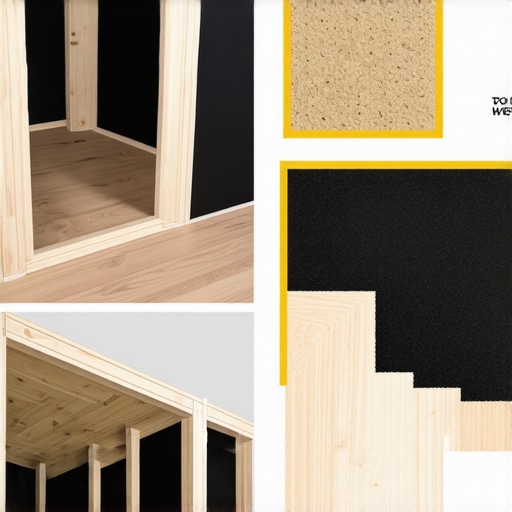
My first attempt at building a soundproof booth was like trying to insulate a tent with bubble wrap—ineffective and frustrating. I realized I needed a sturdy frame, preferably using materials like 2x4s or reclaimed wood, to create a solid structure. This frame will serve as the skeleton for your booth. Measure your space carefully and cut your materials accordingly, ensuring enough clearance for your workspace and equipment.
Seal the Gaps and Cracks
Next, I learned that sealing every crack is crucial. Use weatherstripping tape around doors and windows, and apply acoustic sealant or expanding foam in all joints and gaps. Think of this step as plugging holes in a boat—any leak reduces the effectiveness of your soundproofing. I used a caulking gun to fill gaps around the frame and window frames, which drastically reduced noise seepage.
Layer the Walls with Sound-Absorbing Materials
Once the frame is sealed, add mass-loaded vinyl or dense insulation inside the walls. I opted for mineral wool, which is inexpensive and highly effective at sound absorption. Install it snugly between the studs, like stuffing a pillow with dense feathers. Cover the insulation with a resilient channel if possible, to decouple the wall layers and minimize vibrations that transmit sound.
Add Acoustic Treatments
To further dampen sound, I lined the interior with foam panels, but not just any foam—choose thicker, professional-grade acoustic foam. Think of these panels as the cushions on a giant sofa—they absorb sound waves and prevent echo. Mount the panels strategically on walls and ceiling to cover the most reflective surfaces. Be sure to leave some space between the foam and the wall to prevent sound from bouncing behind it.
Construct a Door That Keeps Noise Out
The door is often the weakest link. I built a door frame from the same sturdy material as the walls, then added a solid core door with weatherstripping around the edges. For extra soundproofing, I added a layer of mass-loaded vinyl to the door surface. This step is like adding a thick blanket over a window; it significantly reduces noise transfer.
Test and Adjust
After completing the build, I tested the booth by playing music outside and inside to identify weak points. Some gaps needed extra sealing, and a few foam panels required repositioning. Expect some trial and error. Remember, the goal is to minimize noise leaks, so don’t hesitate to reinforce or add more layers where needed.
If you’re ready to dive deeper into specific techniques, check out this comprehensive DIY guide.
Many enthusiasts and DIY builders operate under some widespread misconceptions when it comes to soundproofing. One of the most persistent myths is that simply adding foam panels or sealant will make your space completely silent. In reality, soundproofing is a complex process involving multiple layers of materials, proper decoupling, and sealing every possible gap. Overlooking these nuanced aspects can lead to a false sense of security, where noise still leaks through despite your efforts.
Another trap many fall into is relying solely on absorption materials like foam to block out noise. While foam panels are effective at reducing echo and reverb within a room, they are poor at preventing sound from entering or leaving. Effective soundproofing requires mass and density—think of adding layers of drywall combined with dense insulation materials like mineral wool or mass-loaded vinyl. These materials work together to create a barrier that sound waves cannot easily penetrate.
Why Do Many DIY Soundproof Projects Fail Despite Effort?
The answer often lies in the details. For example, neglecting to seal the door frame or the window gaps can render the entire project ineffective. Even small cracks can act as sound leaks, undermining your carefully constructed barriers. I’ve seen many projects where builders spent time and money on walls and insulation but ignored the importance of sealing and decoupling, which are critical for real noise reduction. Remember, sound travels through vibrations, so isolating the structure itself can make a significant difference. For advanced techniques, consider exploring how decoupling drywall using resilient channels can drastically reduce sound transmission—an approach backed by acoustic engineers and detailed in resources like this comprehensive guide.
Moreover, many assume that thicker walls automatically mean better soundproofing. While increased mass helps, the real secret lies in creating a multi-layered, well-sealed, and decoupled assembly. For those interested in delving into the more technical side, mastering concepts like sound transmission class (STC) ratings and how to improve them can elevate your DIY game. Remember, effective soundproofing is an investment in understanding the physics of sound and applying that knowledge meticulously. Have you ever fallen into this trap? Let me know in the comments.
Maintaining your DIY soundproof home office booth is crucial to ensure it continues to provide effective noise reduction over time. Regular upkeep not only preserves soundproofing effectiveness but also extends the lifespan of your materials and construction. One of the most important aspects is inspecting and sealing gaps or cracks that may develop due to settling or wear. Use a high-quality acoustic sealant periodically to fill any newly formed leaks, especially around doors, windows, and joints. This proactive approach prevents noise from creeping in and compromising your focused environment.
Tools I Recommend for Maintenance and Scaling
For consistent maintenance, I rely heavily on a few specialized tools that make the process efficient and effective. A cordless caulk gun equipped with a variety of nozzles is indispensable for applying acoustic sealant precisely and cleanly. I prefer models like the DEWALT DCE560D1, which offers smooth operation and durability, making it easier to re-seal gaps without mess or fatigue. Additionally, a digital sound level meter, such as the NTi Audio XL2, allows me to measure noise levels inside and outside the booth accurately. This helps identify weak points and verify that sealing efforts are successful after each maintenance session.
Another essential tool is a thermal imaging camera, like the FLIR C3, which helps detect heat leaks that often coincide with sound leaks. Identifying these spots enables targeted sealing, improving overall soundproofing. For ongoing projects, I recommend investing in modular acoustic panels with easy-to-mount systems, allowing you to scale your booth’s soundproofing as your needs grow. These panels can be quickly repositioned or added to enhance sound absorption without major structural modifications.
Long-Term Results and Scaling Up
With consistent maintenance and the right tools, your soundproof booth can perform at an optimal level for years. As your needs evolve, consider expanding your soundproofing system by adding mass-loaded vinyl layers or constructing additional decoupling barriers. These upgrades are straightforward if you have the core structure in place, and they significantly improve STC ratings, making your space even more isolated. For those planning larger or more sophisticated setups, modular construction techniques and scalable materials like resilient channels can facilitate future expansion.
How Do I Maintain My Soundproofing Over Time?
The key to long-term success is regular inspection and prompt repairs. Schedule a semi-annual check using your noise level meter and thermal camera to catch issues early. Keep a stash of acoustic sealant, replacement foam panels, and mounting hardware handy for quick fixes. Remember, the physics of sound transmission doesn’t change, so maintaining a meticulous sealing routine is essential. For comprehensive guidance on expanding or upgrading your soundproofing, check out this detailed DIY resource. Don’t hesitate to try advanced sealing techniques or add extra mass layers—small investments in maintenance can yield significant improvements in your workspace’s tranquility.
The Hardest Lesson I Learned About DIY Soundproofing
One of the most valuable lessons I uncovered was the importance of patience and attention to detail. Early on, I believed that layering foam panels would instantly block out noise, but I soon realized that gaps and improper sealing rendered my efforts ineffective. The breakthrough came when I focused on sealing every crack and adding mass to the walls—this attention to detail transformed my space from noisy to serene.
3 Myths About DIY Soundproofing That Held Me Back
Myth 1: Foam panels alone are enough. In reality, soundproofing requires multiple layers of dense materials combined with proper sealing.
Myth 2: Thicker walls automatically mean better soundproofing. While mass matters, proper decoupling and sealing are equally crucial.
Myth 3: DIY is always cheaper and easier than professional solutions. Sometimes, the most effective results come from understanding and applying complex principles, not just quick fixes.
What I Wish I Knew Before Starting
I wish I had invested more time in researching sound transmission physics beforehand. Understanding concepts like STC ratings and the importance of decoupling structures could have saved me months of trial and error. Now, I recommend diving into detailed guides like this resource to truly grasp the nuances.
Reading this post really resonated with me because I’ve always underestimated how much sealing gaps can impact soundproofing. I attempted a DIY booth a while back, and initial efforts with foam panels didn’t quite work out as I’d hoped. It’s clear now that adding mass and sealing every crack are essential steps—something I learned the hard way! I especially appreciate the emphasis on decoupling the layers; it’s a technical detail that often gets overlooked but makes all the difference in getting quieter results.
In my experience, dedicating time to proper sealing and understanding the physics of sound transmission saved me frustration and money in the long run. Has anyone here tried using resilient channels? I’ve read they can greatly diminish vibrations, but I’m curious about other practical tips or materials that have worked well for scaled-up projects. It’s inspiring to see how patience and attention to detail can turn a noisy space into a serene home office.