
My Journey into Sustainable Gardening: Building a Multi-Tiered Worm Composting System
When I first started my eco-friendly gardening adventure, I knew I needed a composting system that was not only efficient but also environmentally conscious. That’s when I decided to create a multi-tiered worm composting system using reclaimed timber. This project was a game-changer, blending my passion for sustainability with practical gardening benefits.
Why Choose Reclaimed Timber for Your Composting System?
Reclaimed timber has a charm and history that new wood simply can’t match. It’s a sustainable choice that reduces waste and adds character to your garden. As I explored options, I found that using reclaimed wood from old pallets or discarded furniture not only saved money but also gave my compost bin an authentic, rustic look. Plus, it’s sturdy and perfect for a multi-tiered setup that encourages healthy worm activity.
Designing My Multi-Tiered Worm Bin: A Personal Touch
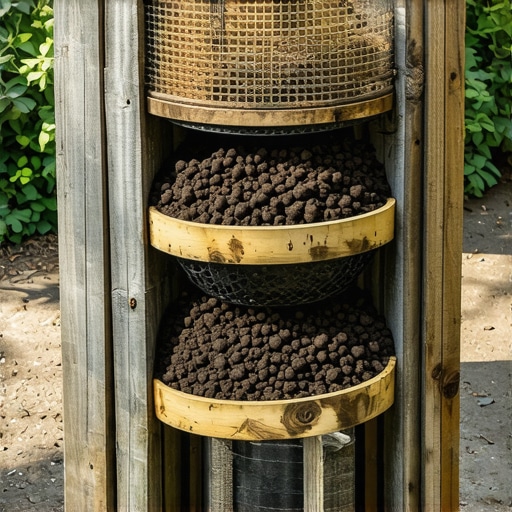
The beauty of a multi-tiered system is its scalability and ease of maintenance. I designed mine with three levels: a top tray for bedding and food scraps, a middle for active composting, and a bottom for harvesting rich worm castings. I used reclaimed timber planks, securing them with eco-friendly nails and ensuring proper ventilation. The modular design allowed me to add or remove tiers as needed, which was incredibly satisfying. For detailed guidance, I often refer to step-by-step DIY guides.
Maintaining the Perfect Environment for My Worms
Creating the right environment was crucial. I lined the inside with natural materials like shredded paper and coconut coir, which I sourced sustainably. Regularly monitoring moisture levels and avoiding chemicals ensured my worms thrived. I learned that keeping the compost moist but not waterlogged was key, and I often turned the bedding gently to aerate it, inspired by advice from expert DIY tips.
What are the key benefits of a multi-tiered worm compost system over traditional bins?
This setup offers several advantages, including increased capacity, better segregation of stages, and easier harvesting of worm castings. It also allows me to manage composting more efficiently, reducing odors and attracting fewer pests—something I found especially helpful in my small backyard.
If you’re considering building your own worm composting system, I highly recommend using reclaimed materials. Not only does it make the project more sustainable, but it also adds a unique aesthetic appeal. Feel free to share your experiences or ask questions in the comments below—I love exchanging ideas on eco-friendly gardening!
For more inspiration on eco-friendly projects, explore building eco-friendly greenhouses or check out creative solutions for home decor that complement a sustainable lifestyle.
Innovative Additions to Your Worm Composting System for Maximum Efficiency
Building upon my experience with a multi-tiered worm bin, I began exploring ways to optimize the environment for my worms and accelerate composting. One approach was integrating natural amendments like biochar or crushed eggshells, which not only improve aeration but also boost microbial activity. These enhancements are rooted in sustainable practices and can significantly influence compost quality, as discussed in expert resources like advanced DIY projects.
Designing a More Resilient and Scalable Compost System
To accommodate a growing garden, I devised an expandable system that allows easy addition of tiers or modules. Using durable, reclaimed materials like repurposed cedar pallets or recycled plastic, I crafted a design that withstands outdoor weather while maintaining a natural aesthetic. The key was ensuring proper ventilation and drainage—critical factors that influence worm health and composting speed. For detailed guidance on constructing custom systems, I often refer to step-by-step DIY guides.
Managing Moisture and Temperature for Optimal Worm Activity
Maintaining the right moisture and temperature levels is vital. I monitor moisture regularly with a simple hygrometer and adjust by adding shredded leaves or coconut coir to balance humidity. To prevent temperature fluctuations, especially in colder months, I insulate my compost bin with recycled denim or straw, ensuring a stable environment. This attention to detail aligns with expert advice from advanced DIY maintenance tips for outdoor projects.
What strategies can an experienced gardener employ to troubleshoot common composting issues before they escalate?
Common issues like foul odors, pests, or slow decomposition often stem from imbalances in moisture, aeration, or food scraps. An expert approach involves diagnosising these problems by inspecting the compost’s smell, texture, and insect activity. Adjusting the carbon-to-nitrogen ratio by adding more browns (like shredded paper) or greens (food scraps) can often resolve odors and pests. Turning the compost regularly introduces oxygen, which is critical for microbial health and faster breakdown. For more advanced troubleshooting methods, I recommend exploring expert DIY tips and resources that delve into complex compost management.
If you’re eager to deepen your understanding of eco-friendly gardening, consider experimenting with other sustainable projects like creating natural pest repellents or designing rainwater harvesting systems. Engaging with the community through comments or sharing your own composting tips can also inspire new ideas and solutions—after all, collaborative knowledge accelerates mastery in sustainable living.
Looking for more inspiration? Check out building eco-friendly greenhouses or discover creative solutions for home decor that harmonize with your gardening pursuits.
Exploring the Microclimates Within My Worm Bin: A Personal Reflection
As I observed my multi-tiered worm composting system evolve, I became increasingly aware of the nuanced microclimates developing within each layer. Each tier, with its unique moisture, temperature, and airflow characteristics, creates a specialized environment that influences worm activity and compost quality. I found that the top layer, often exposed to more oxygen and fluctuations in moisture, required more frequent monitoring and adjustments, while the bottom layer, densely packed with castings, maintained a more stable environment. This insight has prompted me to consider how designing for microclimates can optimize composting efficiency, especially in varied climates. Understanding these subtle variations has deepened my appreciation for the complexity of biological systems and the importance of tailored management practices. For those venturing into similar projects, paying close attention to these microenvironments can yield significant improvements in both worm health and compost harvests.
Harnessing the Power of Natural Amendments: Beyond Basics
Building upon my initial success with coconut coir and shredded paper, I began experimenting with more advanced natural amendments like biochar and crushed eggshells. Biochar, with its porous structure, enhances aeration and water retention while also providing a habitat for beneficial microbes. Crushed eggshells contribute calcium and act as a slow-release mineral source, supporting worm development and microbial activity. Integrating these amendments required a delicate balance; too much could alter the pH or introduce unwanted pests, so I started with small quantities and observed the effects over several weeks. This experimentation underscored the importance of understanding the chemical and physical properties of each amendment, as well as their interactions within the compost ecosystem. For fellow enthusiasts, exploring these advanced amendments offers a path to producing higher-quality castings and fostering a more resilient vermicomposting system. Curious about other sustainable soil enhancers? I recommend delving into advanced DIY projects that integrate eco-friendly amendments for broader gardening benefits.
Managing Unexpected Challenges: Lessons Learned from the Field
Despite meticulous planning, unforeseen challenges like pH imbalances, pests, and temperature swings occasionally disrupted my composting rhythm. One particularly tricky issue was an unexpected influx of pests attracted to food scraps, which I initially thought would be a minor nuisance. Instead, it required me to reevaluate my layering technique, ensuring that food scraps were buried deeper and covered more thoroughly with browns. Additionally, I installed small mesh covers to prevent pest intrusion while maintaining ventilation. These adjustments taught me that adaptive management and continuous observation are crucial in sustainable composting. The key is to view problems as opportunities to learn and refine your system rather than setbacks. For those interested in mastering complex compost management, I suggest exploring expert DIY tips on troubleshooting outdoor projects.
Finally, maintaining a journal of observations and adjustments helped me identify patterns and optimize my approach over time. Sharing your own experiences and solutions with the community can foster collective learning—so I encourage you to comment below with your insights or challenges faced in vermicomposting or other eco-friendly projects. Engaging with like-minded individuals not only accelerates your learning curve but also builds a supportive network dedicated to sustainability and innovation.
Harnessing Microclimate Dynamics to Maximize Worm Activity
Understanding the microclimates within each tier of my composting system revealed subtle environmental variations that significantly impacted worm behavior and compost quality. By carefully adjusting airflow, moisture, and insulation in each layer, I created tailored habitats that fostered healthier worms and faster decomposition. For instance, the top tier, exposed to more oxygen and fluctuations, benefited from increased aeration and moisture regulation, while the bottom layer’s stable environment required less intervention. This micro-level management echoes the principles outlined in advanced DIY projects, where nuanced environmental controls yield superior results. Paying close attention to these microclimates allowed me to optimize the entire system’s efficiency, turning a simple compost bin into a finely tuned ecological machine.
Incorporating Natural Amendments for Resilient Soil Microbiomes
Building upon my foundational amendments, I explored integrating biochar and crushed eggshells to enhance microbial diversity and mineral content within the compost. Biochar’s porous structure improved aeration and water retention, creating a hospitable environment for beneficial microbes, while eggshells supplied essential calcium gradually released over time. This microbial synergy resulted in richer worm castings and more robust plant growth when used as soil amendments. To achieve this, I followed insights from advanced DIY techniques, ensuring precise quantities and thorough mixing. These natural amendments not only elevated compost quality but also fostered a resilient soil ecosystem capable of withstanding environmental stresses.
What are the key considerations when troubleshooting pH imbalances in vermicomposting systems?
Addressing pH imbalances requires a keen diagnostic eye. Common causes include overfeeding greens, which can acidify the environment, or excessive browns, leading to alkalinity. Regular testing with a reliable pH meter, combined with observational cues like odor and worm activity, guides corrective actions. Incorporating lime or crushed eggshells can buffer acidity, while adding organic acids like citrus peels may lower pH if needed. Maintaining a balanced carbon-to-nitrogen ratio is essential, and adjusting bedding materials accordingly helps stabilize pH levels. For a more comprehensive approach, exploring expert troubleshooting tips provides valuable guidance. I encourage you to share your experiences or questions—nurturing a community of dedicated sustainable gardeners enhances collective mastery.
If you’re eager to deepen your expertise, I recommend exploring building eco-friendly greenhouses or delving into innovative DIY projects that elevate your garden’s productivity and resilience. Your journey into advanced compost management can truly transform your eco-living practices.
Things I Wish I Knew Earlier (or You Might Find Surprising)
Mastering Microclimates
One of the biggest revelations was how microclimates develop within each layer of my multi-tiered worm composting system. I used to think a single environment would suffice, but I learned that even slight variations in airflow, moisture, or temperature could significantly impact worm health and compost quality. Paying close attention to these tiny differences allowed me to optimize each tier for maximum efficiency, turning my simple bin into a thriving ecological machine.
Reclaimed Timber’s Hidden Benefits
Initially, I just loved the rustic look of reclaimed timber, but I soon discovered its practical advantages. Old pallets and discarded furniture are often more durable and naturally resistant to pests and rot than new wood. Plus, sourcing reclaimed materials reduced waste and added a unique character to my system, making every piece feel like a part of a sustainable story.
Natural Amendments Are Game Changers
Beyond coconut coir and shredded paper, experimenting with biochar and crushed eggshells truly transformed my compost. These amendments boosted microbial activity, improved aeration, and supplied essential minerals. I realized that integrating natural amendments with care and balance could elevate my compost quality and support healthier worms.
Flexibility in Design Matters
Building a modular, expandable system gave me the flexibility to adapt as my garden grew. Using durable, reclaimed materials like cedar pallets, I designed tiers that withstand weather and allow easy addition or removal. This approach saved me from costly rebuilds and kept the project aligned with my eco-friendly values.
Troubleshooting Is Part of the Journey
Encountering pests or pH imbalances was initially frustrating, but each challenge became a learning opportunity. Adjusting bedding layers, burying food scraps deeper, and installing mesh covers helped me regain control. I learned that ongoing observation and small tweaks are essential in maintaining a healthy, resilient compost system.