
My Journey with Repurposing Old Tires: From Waste to Wonderful
I’ll never forget the first time I decided to turn old tires into vibrant garden planters. It was a sunny weekend, and I was browsing through some DIY ideas to give my backyard a fresh, eco-friendly makeover. I stumbled upon a simple yet brilliant concept: repurposing discarded tires. That day marked the beginning of my sustainable gardening adventure, where I learned firsthand how old tires can be transformed into beautiful, durable accessories for outdoor spaces.
Why I Chose Old Tires for My DIY Garden Projects
It’s incredible how something considered waste can become a garden’s highlight. Old tires are made from tough rubber, making them perfect for outdoor use—they resist weather, pests, and decay. Plus, I appreciated the environmental impact of upcycling instead of letting tires end up in landfills. According to environmental experts, recycling tires reduces pollution and conserves resources, which is a win-win for everyone. I started to see these bulky objects not as trash but as potential art pieces and functional elements in my yard.
Getting Creative with Tire Garden Planters
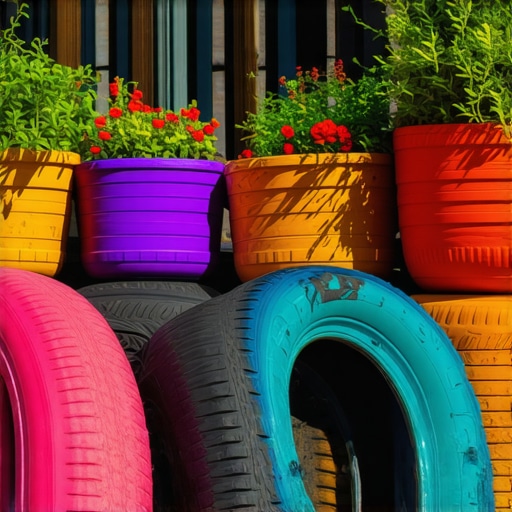
I began by painting old tires in bright, cheerful colors, creating eye-catching flower beds. The process was surprisingly simple: clean, sand, paint, and then fill with soil and plants. I experimented with different sizes, stacking tires to build tiered planters, which added height and visual interest. Using organic potting mixes and native plants, I nurtured a mini oasis right outside my door. It’s rewarding to see how these repurposed tires can support everything from succulents to vegetable gardens, as detailed in home decor ideas.
Turning Tires into Playground Equipment: A Personal Challenge
But it wasn’t just about gardening. I also wanted to create a safe, fun environment for my kids using old tires. Building a tire swing was my first project. With some sturdy ropes and a bit of DIY ingenuity, I crafted a playful, eco-friendly swing that quickly became the favorite spot for my children. Later, I added a tire climbing structure and even a simple obstacle course. These projects not only saved money but also gave me a sense of accomplishment, knowing I was repurposing materials responsibly.
What Are the Key Safety Tips When Repurposing Tires?
This question often arises among DIY enthusiasts. To ensure safety, I always inspect tires for cracks or damages before use. Cleaning and removing any residues or chemicals from the tires is crucial—sometimes, I soak them in a vinegar solution for safe, natural cleaning. For playground projects, securing the tires firmly and using weather-resistant, non-toxic paint are essential steps. You can find more detailed safety guidelines at home improvement tips.
Could Upcycling Old Tires Be My Next Green Project?
Absolutely! The more I explored, the more I realized how versatile and sustainable this DIY idea is. From creating colorful planters to building fun, eco-friendly playground equipment, old tires have endless potential. I encourage every DIY enthusiast to give it a try—it’s fun, cost-effective, and kind to our planet. Plus, sharing your projects and learning from others can inspire even more creative ideas. If you’ve ever turned old tires into something special, I’d love to hear about your experience—feel free to comment below!
Unlocking the Potential of Recycled Materials: More Than Just Tires
While old tires are a popular choice for eco-friendly projects, the realm of repurposing extends far beyond. As an expert in sustainable DIY practices, I’ve explored various materials that can be transformed into functional art and home improvements. From reclaimed wood to discarded glass bottles, the possibilities are endless. For instance, upcycling broken ceramics into mosaic garden stepping stones not only reduces waste but also adds a unique aesthetic to outdoor spaces. Curious about other creative ways to utilize scrap materials? Check out upcycling broken ceramics for inspiring ideas.
How Can Advanced Techniques Elevate Your DIY Projects?
Applying advanced techniques such as encaustic painting or natural dyeing can significantly enhance the quality and artistic value of your DIY creations. Encaustic art, which involves layering beeswax and pigment, allows for stunning texture and depth, perfect for wall art or decorative panels. Meanwhile, natural dyeing with earth pigments, as detailed in earth-based pigments, offers eco-friendly ways to add vibrant colors to fabrics and paper. Mastering these techniques requires patience and practice, but the results are truly rewarding and can establish you as a skilled artisan in your community.
Can Smart DIY Innovations Make Your Home More Eco-Friendly?
Absolutely. Integrating smart, DIY solutions into your home can lead to significant energy savings and a smaller carbon footprint. For example, building a simple rainwater harvesting system with a first-flush filtration setup not only conserves water but also reduces utility bills. Similarly, creating UV-protective glazing for windows can improve energy efficiency while maintaining natural light. For more detailed guidance on these projects, visit smart DIY innovations. These projects demonstrate that with a bit of technical know-how, you can make your home smarter, greener, and more sustainable.
What Are the Practical Challenges When Working with Recycled Materials?
One common question among DIY enthusiasts is how to address the practical challenges of working with recycled materials. For instance, materials like reclaimed wood may have imperfections or structural weaknesses, requiring careful inspection and treatment. When working with glass or ceramics, safety precautions such as proper cutting tools and protective gear are essential. Moreover, understanding the properties of each material—such as flexibility, durability, and compatibility with adhesives or paints—can save time and improve project longevity. By sharing your experiences or seeking advice from seasoned DIYers, you can overcome these challenges more efficiently. Don’t forget, detailed tutorials such as step-by-step guides can help you navigate complex projects with confidence.
If you’ve found innovative ways to reuse materials or mastered advanced techniques, I encourage you to share your story. Your insights could inspire others to pursue eco-friendly DIY projects and contribute to a more sustainable world. Feel free to comment below or explore more creative ideas through our curated resources—happy crafting!
Delving into the Nuances of Eco-Friendly DIY Techniques
My journey into sustainable DIY projects has been a continuous exploration of not only materials but also the sophisticated techniques that elevate the quality and durability of my creations. For instance, mastering advanced staining and sealing methods for outdoor wooden decks has transformed my approach, allowing me to preserve the natural beauty of wood while ensuring longevity against the elements. Techniques like these require patience and a keen understanding of material properties, but the results are truly rewarding, turning a simple deck into a timeless feature of my garden space.
How Can Natural Pigments and Earth-Based Dyes Elevate Your Art and Home Decor?
Using natural pigments derived from earth and foraged plants has opened a new dimension in my artistic pursuits. These materials, rich in history and sustainability, produce vibrant, lightfast colors that are safe for both the environment and my family. Applying these pigments in encaustic painting or fabric dyeing results in textured, layered effects that synthetic dyes simply cannot replicate. I found that experimenting with different plants and mineral sources, as explained in natural dyeing techniques, deepens my connection with nature and enhances the authenticity of my art.
What Are the Practical Challenges and Solutions in Implementing Advanced DIY Techniques?
One of the most rewarding yet challenging aspects of advanced DIY work is troubleshooting when things don’t go as planned. For example, achieving uniform layering in encaustic art demands precise temperature control and layering order, which can be tricky for beginners. Similarly, natural dyeing often involves unpredictable color outcomes and requires a good understanding of mordants and fabric preparation. Overcoming these hurdles has taught me patience, meticulous planning, and the importance of thorough research—resources like advanced encaustic techniques and comprehensive tutorials are invaluable. Sharing my experiences and learning from others has been instrumental in refining my skills, and I invite fellow DIY enthusiasts to exchange insights and tips.
How Can Smart DIY Solutions Make Your Home More Sustainable?
Integrating smart, eco-friendly DIY innovations has been a game-changer. Building a rainwater harvesting system with a first-flush filtration setup, for instance, has significantly reduced my water bills and environmental footprint. These projects often involve technical steps, but with guidance from detailed smart DIY solutions, they become accessible and rewarding. The key is to start small—perhaps with a simple solar-powered gadget or a natural air purifier—and gradually expand your system. The blend of technology and eco-awareness allows me to contribute meaningfully to sustainability while honing my DIY skills.
Encouraging Personal Growth and Community Sharing
Every successful project, whether it’s a natural paint or an advanced staining technique, fuels my passion for sustainable living and creative expression. I realize that sharing these experiences, through comments or social media, not only enriches my journey but also inspires others to pursue their own eco-friendly DIY endeavors. Together, we can build a community rooted in innovation, respect for the environment, and continuous learning. If you’ve experimented with advanced techniques or smart solutions, I’d love to hear your stories. Feel free to comment below, and let’s keep the momentum going!
Harnessing the Power of Eco-Conscious Mastery in Advanced DIY Techniques
Delving into the realm of sophisticated DIY practices has profoundly enriched my approach to sustainable living. Beyond the basics of upcycling tires or painting with natural pigments, mastering techniques such as encaustic layering or creating durable natural finishes has elevated my projects from simple crafts to enduring works of art. These methods demand patience, precision, and a solid understanding of material behavior, but the resulting pieces boast not only aesthetic appeal but also long-term resilience. Incorporating such advanced skills allows me to produce truly unique decor elements that encapsulate eco-friendly principles while showcasing creative mastery.
The Science and Art of Natural Pigments: Deepening Your Artistic Sustainability
In my artistic journey, I have found that natural pigments derived from earth and foraged plants add an authentic, vibrant dimension to my work. The process of extracting and preparing these pigments, as detailed in natural dyeing techniques, fosters a deeper connection to nature and enhances the sustainability of my art. These pigments possess remarkable lightfastness and compatibility with various mediums, enabling me to create pieces that are both beautiful and environmentally responsible. Experimenting with different mineral and botanical sources has taught me the nuances of color stability and application, further refining my craft.
Overcoming Challenges in Advanced DIY Applications
Engaging with complex techniques inevitably presents hurdles, such as achieving uniform encaustic layers or controlling unpredictable natural dye colors. Troubleshooting these issues has been an educational journey—requiring meticulous research and experimental adjustments. For instance, mastering temperature control in encaustic art ensures consistent textures, while understanding mordant chemistry improves dye fixation. Resources like advanced encaustic techniques and comprehensive tutorials have been invaluable. Sharing my experiences and seeking advice from seasoned practitioners has fostered a collaborative spirit that accelerates skill acquisition and project success.
Integrating Smart DIY Solutions for a Greener Home
Innovative, eco-friendly projects that incorporate smart technology have transformed my living space into a model of sustainability. Building a rainwater harvesting system with automated filtration, for example, not only conserves water but also reduces utility costs. Designing natural ventilation systems, solar-powered gadgets, or eco-conscious energy management devices has become an ongoing pursuit. These endeavors require a blend of technical skills and environmental awareness, fostering a sense of empowerment and responsibility. For those eager to explore such projects, starting with simple modifications and scaling gradually can lead to significant environmental and financial benefits.
Fostering a Community of Knowledge and Innovation
The journey of mastering advanced DIY techniques and smart solutions is best shared. Engaging with online communities, participating in workshops, or documenting your process encourages continuous learning and collaboration. I invite fellow enthusiasts to exchange insights, troubleshoot challenges, and celebrate successes—each story contributing to a collective knowledge base that drives innovation. If you’re inspired to elevate your DIY endeavors, I encourage you to dive into these sophisticated techniques and share your progress. Together, we can foster a vibrant community committed to sustainable creativity and ecological responsibility.
Things I Wish I Knew Earlier (or You Might Find Surprising)
1. Not All Tires Are Created Equal
Initially, I thought any old tire could be repurposed, but I soon discovered that some tires have chemicals or damages that make them unsuitable for DIY projects, especially those involving children or food gardens. Always inspect tires carefully before starting your project.
2. Proper Cleaning Is Crucial
Cleaning tires thoroughly isn’t just about aesthetics; it’s about safety. Soaking tires in a vinegar solution helped me remove residues and chemicals, making them safer and more eco-friendly for reuse.
3. Painting and Sealing Extend Durability
Using weather-resistant, non-toxic paint and sealants significantly increased the lifespan of my tire planters and playground equipment. It’s worth investing in quality supplies for long-term satisfaction.
4. Creativity Transforms Waste into Art
Stacking tires, painting patterns, or combining different sizes can create unique, eye-catching elements in your outdoor space. My favorite was stacking tires into a colorful tiered garden bed, which became a centerpiece of my backyard.
5. Safety First with Playground Equipment
When building playground features like tire swings or climbing structures, securing everything tightly and using soft, natural ground cover underneath is essential to prevent injuries. Always double-check your work before letting kids play.
6. Community Sharing Inspires More Ideas
Sharing my tire projects online introduced me to a vibrant community of DIY enthusiasts. Their tips and encouragement motivated me to experiment further and improve my techniques.
Resources I’ve Come to Trust Over Time
- Environmental Protection Agency (EPA): Their guidelines on safe tire disposal and recycling are comprehensive and trustworthy, helping me stay informed about environmental impacts.
- Instructables: This platform offers countless step-by-step tutorials on tire repurposing, which I found invaluable for tackling complex projects.
- Earth911: Their recycling directory and eco-friendly tips helped me find local disposal options and learn sustainable practices.
- DIY Network: Their expert advice on safe DIY playground equipment ensured I built fun, safe structures for my kids.
Parting Thoughts from My Perspective
Upcycling old tires has truly transformed the way I see waste and creativity. It’s an accessible, rewarding way to add personality and sustainability to outdoor spaces. If you’re considering giving it a try, remember that safety, patience, and a little bit of imagination are your best friends. I encourage you to explore your local resources and community ideas—who knows, your next favorite project might be just a tire away. If this resonated with you, I’d love to hear your experiences or ideas. Feel free to share in the comments or pass this along to a fellow DIY enthusiast—let’s keep inspiring each other toward a greener, more creative world.