
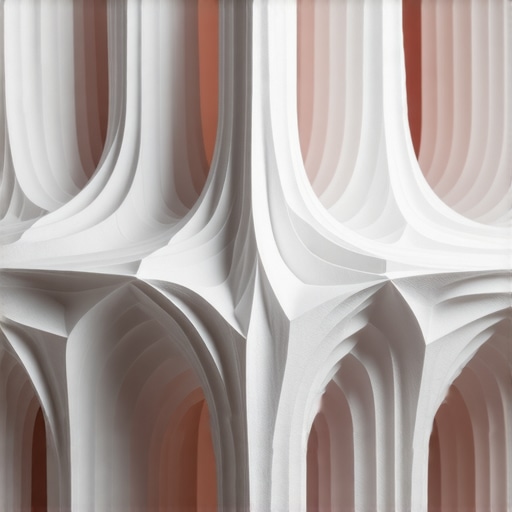
My Journey into the Intricate World of Modular Origami
Weeks ago, I found myself mesmerized by a stunning tessellated pattern I stumbled upon online. The complexity and precision inspired me to dive deeper into the art of modular origami, especially tessellations and structural folding. As I embarked on this journey, I realized that mastering these techniques is both challenging and incredibly rewarding. Today, I want to share my personal insights, tips, and resources I’ve discovered along the way.
Understanding the Foundations of Modular Origami
Before tackling complex tessellations, I made sure to strengthen my grasp on basic origami principles. I learned that the key to successful tessellations lies in precision folding and an understanding of geometric symmetry. I recommend exploring step-by-step guides to build a solid base. These foundational skills help in creating stable and visually captivating modular structures that can be scaled up or customized.
Tips for Achieving Structural Integrity in Folding
One challenge I faced was ensuring that my tessellations held their shape without collapsing. I found that using slightly thicker paper or cardstock helps maintain the structure. Additionally, I discovered that precise alignment and consistent crease lines are crucial. For complex models, I often refer to advanced folding techniques to refine my skills. These methods include pre-creasing and back-folding, which add strength to the final model.
What Are the Key Challenges in Modular Tessellations?
Personally, I struggled with the repetitive nature of folding and the patience required for intricate patterns. It’s easy to lose track of the pattern’s symmetry during long sessions. I found that taking breaks and double-checking each fold helps prevent errors. Additionally, watching tutorial videos by experienced origami artists has been invaluable. They often explain subtle techniques that aren’t immediately obvious in diagrams. For instance, I often check out complex tessellation tutorials to improve my approach.
How Can I Push My Skills Further in Structural Folding?
To elevate my origami, I started experimenting with different types of paper, including handmade Japanese Washi, which adds texture and durability. I also began designing my own tessellations, combining mathematical patterns with artistic expression. The key is to keep practicing and studying the work of masters in the field. If you’re interested in advanced techniques, I highly recommend exploring advanced folding projects that challenge your skills.
If you’re passionate about this craft, I encourage you to share your progress or ask questions in the comments. Connecting with fellow enthusiasts has enriched my understanding and motivation. Remember, every crease you make brings you closer to mastering this beautiful art form.
Unlocking the Secrets of Precision in Modular Origami
Achieving flawless tessellations requires an unwavering focus on accuracy and geometric intuition. As I delved into more intricate designs, I realized that meticulous measurement and consistent folding are paramount. Using tools like a bone folder for crisp creases and a metal ruler for alignment can significantly enhance precision. Moreover, experimenting with different paper textures, such as textured washi or heavy cardstock, can influence the final structure’s stability and aesthetic appeal. Exploring advanced folding techniques like pre-creasing and back-folding can elevate your models from simple to complex, allowing for more dynamic and resilient structures.
The Art of Geometric Innovation: Designing Your Own Tessellations
One of the most rewarding aspects of mastering modular origami is creating original tessellations. By understanding the underlying geometric principles—such as symmetry, angles, and repetition—you can craft patterns that are both unique and mathematically sound. I often start with simple grids, then experiment with variations like star, honeycomb, or fractal patterns. Digital tools like geometric design software can aid in visualizing complex patterns before folding. This approach not only enhances creativity but also deepens your comprehension of spatial relationships. For inspiration, I recommend exploring tutorials on complex tessellations to push your boundaries further.
How Can Advanced Folding Techniques Strengthen Your Creations?
Integrating advanced techniques such as pre-creasing, reverse folds, and layered folding can dramatically improve both the appearance and durability of your origami models. For instance, incorporating back-folds adds structural integrity, making models resistant to collapse. Similarly, layering paper strategically can create textured surfaces or three-dimensional effects that elevate the visual impact. Practicing these methods requires patience and attention to detail, but the results are well worth the effort. To refine these skills, I suggest studying detailed guides like advanced folding tutorials that explore the nuances of structural reinforcement in origami.
What Are the Practical Applications of Mastering Modular Origami?
Beyond aesthetics, advanced modular origami techniques can be applied in educational settings to teach geometry, engineering, and even architecture. Complex tessellations can serve as models for structural design, demonstrating how repeated units distribute stress and maintain stability. Additionally, crafting intricate models enhances fine motor skills and spatial reasoning, which are valuable in various STEM fields. Many enthusiasts have even used their skills to create functional art pieces—like decorative lamps or architectural models—highlighting the versatility of this craft. If you’re eager to explore more, check out comprehensive DIY guides that assist in elevating your craftsmanship.
Would you like to share your own complex origami projects or discuss specific techniques? Engaging with a community of passionate crafters can inspire new ideas and refine your skills. Remember, every fold and crease is a step toward mastery—so keep folding, experimenting, and pushing your creative limits!
Embracing the Nuances of Precision and Creativity in Modular Origami
Throughout my journey into the world of modular origami, I’ve come to appreciate that beyond just following instructions, true mastery involves understanding the subtle nuances that make each piece stand out. For instance, experimenting with different paper textures, such as textured washi or heavy cardstock, has allowed me to explore how material influences structural integrity and aesthetic appeal. This personal experimentation has deepened my appreciation for the craft and opened doors to innovative designs that challenge conventional boundaries.
Refining Techniques: The Power of Pre-Creasing and Layering
Advanced folding techniques like pre-creasing and strategic layering have been pivotal in elevating my work. Pre-creasing ensures accuracy in complex patterns, while layering adds depth and resilience to models. These methods require patience and a keen eye for detail but reward with models that are both visually stunning and structurally sound. I often spend extra time practicing these techniques, referencing detailed guides and tutorials from seasoned origami artists, which help me identify subtle improvements and refine my skills.
Deepening Geometric Understanding for Unique Designs
One of the most rewarding aspects of modular origami is designing my own tessellations. This process involves a deep understanding of geometric principles—angles, symmetry, and repetition. I frequently use digital design tools to visualize complex patterns before folding, which saves time and enhances creativity. For example, exploring fractal patterns or star-based tessellations allows me to push my artistic and mathematical boundaries, resulting in truly unique pieces that reflect both my technical skill and artistic vision. For inspiration, I revisit tutorials on complex tessellations, which continually challenge me to think outside the box.
Integrating Advanced Techniques for Structural Integrity
Incorporating techniques like back-folds and strategic reinforcement has made my models more durable and visually appealing. These methods involve careful planning and a meticulous approach but significantly improve the resilience of intricate structures. For example, back-folds can add a three-dimensional aspect, transforming flat tessellations into dynamic sculptures. To master these, I study comprehensive guides and practice consistently, understanding that each fold contributes to the overall stability and beauty of the finished piece.
Community and Sharing: The Joy of Collaborative Growth
One of the most enriching parts of my journey has been engaging with a community of passionate origami enthusiasts. Sharing my projects, exchanging techniques, and receiving feedback have been instrumental in my growth. Platforms like dedicated forums or social media groups provide invaluable support and inspiration. I encourage fellow crafters to document their progress, ask questions, and participate actively. Every shared project not only boosts confidence but also fosters a collective learning environment where innovation thrives.
Exploring Practical Applications and Future Possibilities
Looking ahead, I see endless possibilities for applying modular origami beyond decorative art. From educational models that teach geometric concepts to structural prototypes in architecture, the potential is vast. For instance, creating models that demonstrate stress distribution can inspire engineering designs, while intricate tessellations can serve as inspiring wall art or functional lighting fixtures. The key is to continue pushing boundaries, experimenting with new materials, and embracing the complexity that makes this art form so fascinating. I invite you to share your own experiences and explore further by visiting resources like craft ideas for all ages, which can spark new creative avenues for your projects.
Harnessing the Power of Mathematical Precision in Complex Tessellations
Delving into the realm of intricate modular origami, I’ve discovered that a profound understanding of mathematical principles significantly elevates the quality of tessellations. By meticulously analyzing angles, symmetry, and spatial relationships, I can design patterns that are both aesthetically captivating and structurally robust. Utilizing digital tools such as Geogebra or Adobe Illustrator allows me to experiment with complex geometric configurations before committing to paper folds, saving time and reducing errors. This approach transforms the creative process from mere trial-and-error to a strategic exploration of mathematical harmony, enabling the creation of larger and more elaborate structures that push the boundaries of traditional origami craftsmanship.
Integrating Structural Reinforcement with Artistic Expression
One of my key innovations involves combining advanced folding techniques like back-folds, pre-creasing, and layered folding to enhance both resilience and visual complexity. For example, strategically reinforcing junctions with multiple layers of paper creates a more durable tessellation capable of supporting intricate extensions or modifications. This structural approach opens new avenues for artistic expression—transforming flat patterns into dynamic, three-dimensional sculptures that reflect a synthesis of engineering principles and aesthetic vision. Exploring materials such as textured washi or synthetic papers with high tensile strength further amplifies these effects, allowing for durable yet expressive models that can serve as functional art pieces or architectural prototypes.
What Are the Latest Innovations in Modular Origami Design Techniques?
Recent advancements have seen the emergence of algorithmic pattern generation and parametric design, where software algorithms dictate fold patterns based on input parameters. These innovations facilitate the creation of highly complex tessellations that would be nearly impossible to conceptualize manually. For instance, using software like Rhino or Grasshopper, I can generate parametric models that translate directly into fold patterns, bridging the gap between digital design and hand-crafted origami. According to a study on computational origami, these approaches not only expand creative possibilities but also improve precision and reproducibility, essential for large-scale or commercial projects. Exploring these cutting-edge techniques has profoundly expanded my capacity to innovate within this art form and encourages others to embrace technology as a vital tool in their creative toolkit.
How Can I Incorporate Sustainable Practices into My Advanced Origami Projects?
Sustainability is a guiding principle in my creative process. I prioritize sourcing eco-friendly papers, such as recycled or responsibly harvested materials, to minimize environmental impact. Additionally, designing modular origami pieces that can be disassembled and reused reduces waste and encourages a mindset of longevity and adaptability. Incorporating natural dyes derived from earth pigments or botanical extracts not only enhances aesthetic appeal but also aligns with eco-conscious values. For example, I recently experimented with eco-dyes to color textured washi, resulting in unique, vibrant finishes that deepen the connection between art and nature. By integrating these sustainable practices, I believe origami can evolve into an even more meaningful discipline that respects environmental stewardship while fostering artistic innovation.
If you’re eager to elevate your origami skills, I invite you to share your experiences or ask questions about these advanced techniques. Engaging with a community of passionate crafters accelerates growth and sparks new ideas, so don’t hesitate to connect and exchange insights—after all, mastery is a journey shared among enthusiasts dedicated to pushing creative boundaries.
Refining Your Artistry Through Continuous Innovation and Experimentation
In my ongoing exploration of modular origami, I’ve found that continuous experimentation with new materials, tools, and techniques is essential. Whether it’s exploring the structural possibilities of modern synthetic papers, mastering complex folding algorithms, or designing original tessellations inspired by natural fractals, each endeavor deepens my understanding and broadens my creative horizon. I regularly review scholarly articles on origami and mathematical design, such as those published by the Origami Science and Technology Journal, to stay abreast of emerging trends and methodologies. This disciplined pursuit of knowledge and experimentation fuels my passion and enables me to craft models that are not only visually stunning but also intellectually stimulating—embodying the perfect harmony of art and science. I encourage fellow enthusiasts to embrace these challenges, explore innovative resources, and share their breakthroughs to contribute to the vibrant evolution of this craft.
Things I Wish I Knew Earlier (or You Might Find Surprising)
The Power of Patience
One thing I underestimated when diving into modular origami was how much patience it truly demands. Early on, I often rushed through folds, which led to misaligned modules and frustration. Over time, I realized that taking my time, double-checking each fold, and embracing slow, deliberate work significantly improved my results and enjoyment.
The Material Matters
Initially, I thought any paper would do, but I quickly discovered that the choice of paper can make or break a tessellation. Thicker, sturdy papers like cardstock or handmade washi can support complex structures better and add a lovely texture. Experimenting with different materials opened up new creative possibilities I hadn’t considered.
Geometry Is Your Friend
Understanding basic geometric principles, such as symmetry, angles, and repetition, has been a game-changer. Even simple tools like a protractor or digital design software help visualize patterns before folding. This blend of art and math makes designing your own tessellations both fun and rewarding.
Community Is Invaluable
Joining online forums and social media groups has provided immense support. Sharing progress, asking for feedback, and learning from others’ experiences keeps motivation high and sparks new ideas. Connecting with fellow enthusiasts transforms origami from a solitary hobby into a vibrant community.
Resources I’ve Come to Trust Over Time
- Origami Spirit: This website offers comprehensive tutorials and pattern ideas that have guided me from beginner to advanced models. It’s a treasure trove of well-explained techniques.
- Geogebra: A free, powerful tool for visualizing geometric patterns, which has been instrumental when designing my own tessellations.
- YouTube Channels like Jo Nakashima: Watching experienced origami artists demonstrates subtle folding techniques and provides inspiration for complex projects.
- Origami Science and Technology Journal: For those interested in the scientific side, this journal explores innovative techniques and the mathematics behind origami.
Parting Thoughts from My Perspective
Reflecting on my journey into modular origami, I realize that patience, material choice, understanding geometry, and community support are vital. This craft beautifully combines art and science, offering endless opportunities for creativity and learning. If you’re passionate about this art form, I encourage you to experiment boldly, seek out trusted resources, and connect with others who share your enthusiasm. Every fold brings you closer to mastery, and the process itself is incredibly fulfilling. If this resonated with you, I’d love to hear your thoughts or see your projects—feel free to drop a comment or share your experiences!